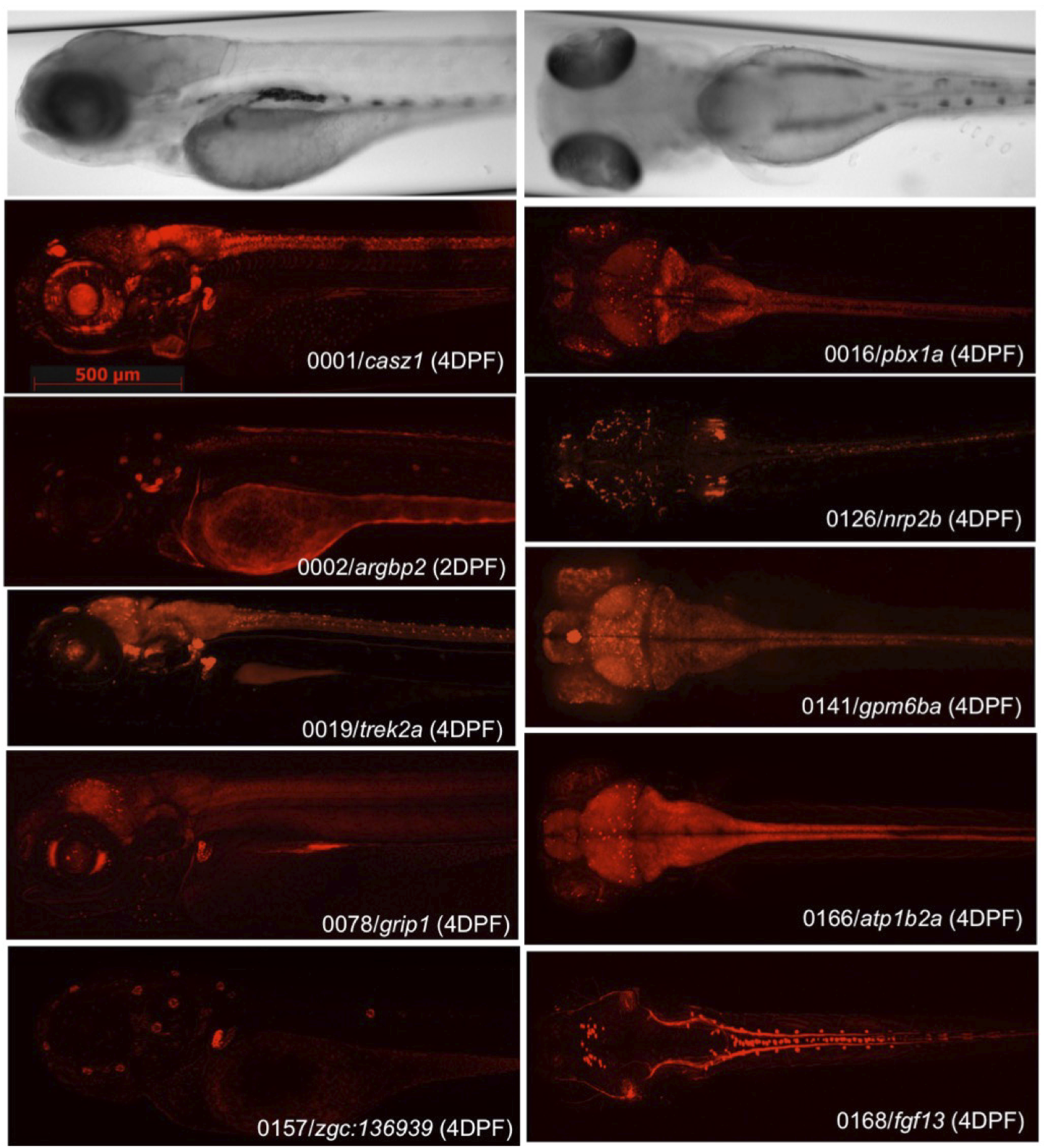
Our Gene Break Transposon (GBT) program provides undergraduate students with the opportunity to participate in authentic genetic discovery. Using zebrafish, students help generate and characterize new insertional mutant lines that can reveal how previously understudied genes contribute to development, physiology, and behavior.
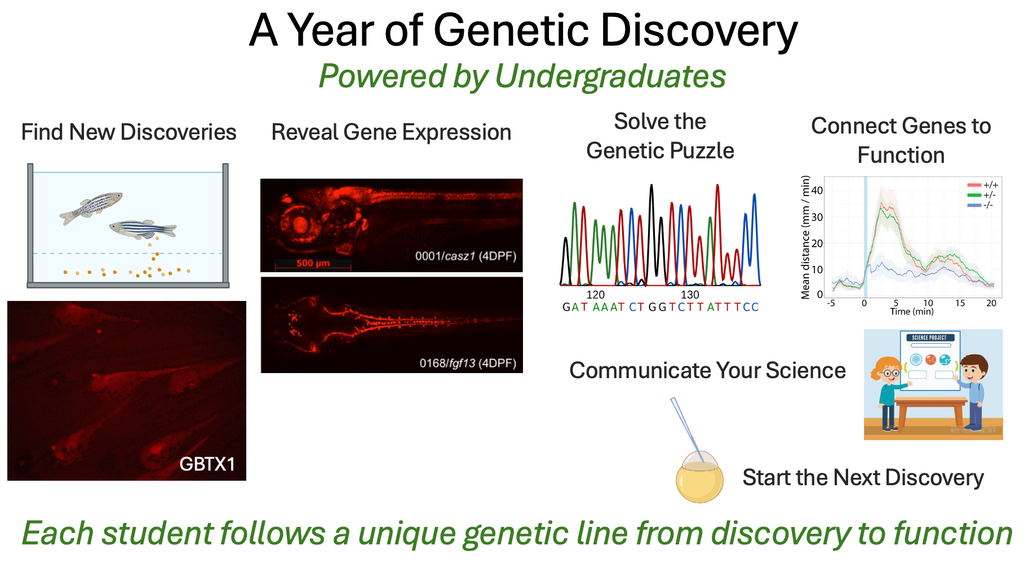
Students participate throughout the entire discovery process, from identifying novel fluorescent reporter lines and documenting gene expression patterns to determining the disrupted gene and evaluating potential phenotypic consequences. Because each line represents a unique genetic question, students develop ownership of an independent research project while gaining experience in animal husbandry, microscopy, molecular biology, genetics, and data analysis.
This student-driven discovery pipeline creates meaningful research opportunities while generating new genetic resources that support broader investigations into vertebrate biology and disease.